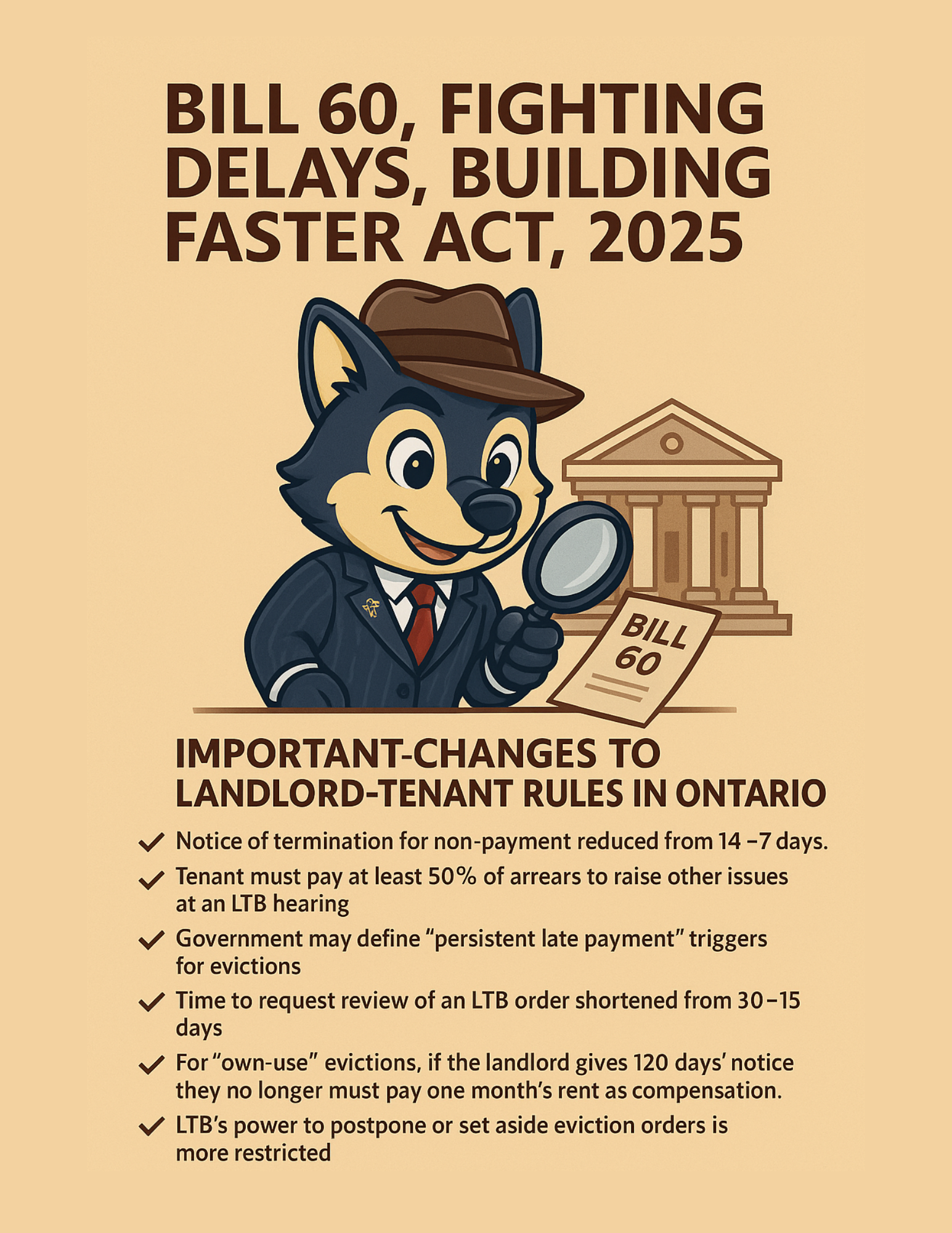
Hey there, friends! Case the Wolf here bringing you a clear, friendly breakdown of Bill 60, one of Ontario’s biggest updates to the Landlord and Tenant Board (LTB) in years.
There’s been a lot of buzz about new rules, stronger protections, and changes to how evictions and maintenance disputes work. So, let’s walk through it together, step by step, so you know exactly what’s going on. Whether you’re a landlord, a tenant, or just curious about the housing changes happening across Ontario this post should assist you.
What Is Bill 60 All About?
Bill 60 focuses on improving fairness, speeding up LTB hearings, and cracking down on misuse of eviction notices—especially “bad-faith” evictions and “renovations.” It strengthens accountability while trying to make the system easier for everyone to navigate.
Think of it as giving the LTB a much-needed tune-up.
- Faster & Clearer LTB Processes
For years, the LTB has been overloaded, causing long delays. Bill 60 pushes for:
- More adjudicators
- Faster scheduling
- More consistent decisions
- Better support for self-represented tenants and landlords
Case’s translation: “You should get your day at the tribunal sooner—and with clearer rules.”
- Tougher Rules for Bad-Faith Evictions
You know those N12 evictions where a tenant is told a family member needs the unit… but suddenly the place ends up rented to someone else at a higher price?
Yeah. Bill 60 wasn’t impressed either.
The changes now include:
- Higher fines for landlords who misuse N12/N13 notices
- Stricter proof before these evictions can move forward
- Stronger rights for tenants to return after renovations
- More compensation for tenants pushed out improperly
Case’s translation: “If you kick someone out for the wrong reason, the consequences just got bigger.”
- Renovations Now Come with Much Stricter Rules
Renovations happen. But sometimes they’ve been used as a loophole to evict long-term tenants.
Bill 60 makes renovations harder to misuse by requiring:
- Detailed proof that major renovations truly require the tenant to leave
- Clear explanations of what work is being done and why
- Enforceable rights for tenants to return at a similar rent once renovations are done
Case’s translation: “Real renos? Fine. Fake renos? No chance.”
- Clearer Rules for Above-Guideline Rent Increases (AGIs)
AGIs are confusing for many people. Bill 60 simplifies things by requiring landlords to provide:
- Better documentation
- Proof of major capital repairs
- Transparent cost breakdowns
The LTB can now shut down unsupported AGIs much earlier.
Case’s translation: “If you’re asking to raise rent above the guideline, you’ll need to show the receipts.”
- Stronger Maintenance & Repair Enforcement
Bill 60 doesn’t just focus on evictions—it also strengthens tenants’ rights when repairs aren’t being done.
Now the LTB can issue:
- Stricter repair deadlines
- Inspections
- Penalties for ignoring maintenance orders
And landlords with unresolved repair issues may be blocked from seeking certain rent increases or enforcement steps.
Case’s translation: “No repairs? No special rent increases.”
- More Protection for Vulnerable Tenants
Some tenants face serious safety issues, including violence or threats.
Bill 60 introduces:
- Faster early-termination rights
- Better privacy protections
- Streamlined processes for those in danger
Case’s translation: “If you’re unsafe, the law now moves faster to protect you.”
What Landlords Should Know
Bill 60 means:
- More paperwork for certain applications
- More responsibility when filing eviction notices
- Higher fines for mistakes or bad-faith conduct
- Stricter evidence requirements for N12/N13 evictions
Good landlords who follow the rules benefit from a clearer, more predictable system.
What Tenants Should Know
Tenants now have:
- Stronger protections from unfair evictions
- More transparency in the eviction process
- Better enforcement of maintenance rights
- Clearer access to compensation when rights are violated
Why Bill 60 Matters
Bill 60’s purpose is simple:
- Make the LTB faster
- Make the system fairer
- Protect both good landlords and honest tenants
- Reduce backlogs
- Crack down on dishonest practices
It’s a major update, and understanding it can help prevent costly mistakes on both sides.
Case’s Final Word
Housing law can be confusing, stressful, and overwhelming but you don’t have to navigate it alone. If you’re dealing with:
- Evictions
- Bad-faith N12/N13 issues
- Maintenance disputes
- Rent increases
- Tenant rights questions
- Landlord obligations
We are here to help you understand your options and guide you through the LTB process.
Ready to speak with a licensed paralegal about your situation?
Book a Consultation →Legal Bites by Case the Wolf
Want to go deeper on this topic? Case the Wolf has plain-language guides at GOTACASE.CA.
Read more at GOTACASE.CALegal notice: This article is for general information only and does not constitute legal advice. Laws and procedures may change. For advice specific to your situation, please book a consultation with a licensed paralegal.